Introduction
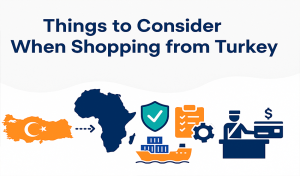
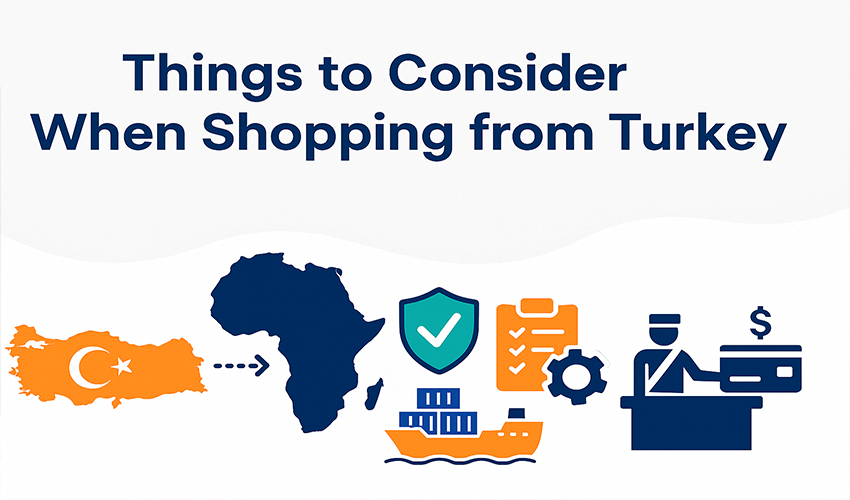
Turkey has become a trusted trade partner for many African businesses thanks to its wide product range, competitive pricing, and strong logistics. However, when shopping or importing from Turkey, it’s important to pay attention to several key factors to ensure a smooth and profitable experience.
1. Choose Reliable Suppliers
Not all suppliers are the same. African buyers should always work with verified and experienced exporters. Checking company references, product certificates, and past trade records helps avoid risks.
2. Understand Product Quality and Standards
Turkey produces goods that meet European quality standards, but it’s still important to confirm product specifications. For example, when ordering ceramics, household items, or textiles, request samples or detailed product catalogs before placing large orders.
3. Know the Trade Terms (Incoterms)
Understanding trade terms such as FOB (Free on Board), CIF (Cost, Insurance, Freight), and EXW (Ex Works) is crucial. These terms define who is responsible for shipping, insurance, and customs clearance. Choosing the right one can save both time and money.
4. Plan for Customs and Import Duties
Each African country has its own import regulations, taxes, and customs procedures. Before shipping, make sure to calculate all costs—including duties and VAT—to avoid unexpected expenses upon arrival.
5. Use Safe Payment Methods
When buying from Turkey, choose secure payment options such as bank transfers (SWIFT), letters of credit (LC), or escrow services. Avoid risky transactions that do not provide buyer protection.
6. Logistics and Shipping Routes
Turkey has direct sea routes to major African ports like Douala, Lagos, Abidjan, and Dakar. Selecting the right shipping method—container, groupage, or air cargo—depends on the type and volume of products.
Conclusion
Shopping from Turkey can be highly profitable for African importers, as long as they pay attention to supplier reliability, product quality, trade terms, customs, payments, and logistics. With careful planning, African businesses can build long-term, successful partnerships with Turkish suppliers.